
February 13, 2026
Article
How Ambient Intelligence Learns Your Preferences Without Being Creepy
The difference between "helpful" and "invasive" comes down to one thing: who's in control. Here's how ambient intelligence personalizes your experience while keeping your data entirely yours.
The Personalization Paradox
We all want technology that understands us. We want our tools to know what we need before we ask. We want recommendations that actually make sense, reminders that arrive at the right moment, and suggestions that feel tailored to how we think and work.
But the second something feels too personalized, alarm bells go off. How does it know that? Who else can see this? Am I being watched?
This tension has defined the last decade of technology. Big tech solved personalization by harvesting everything, selling your behavioral data to advertisers, and building profiles you never consented to. The result? We've been trained to associate "smart technology" with "surveillance technology."
Ambient intelligence breaks that association entirely.
Learning Through Context, Not Surveillance
Traditional AI personalization works by collecting massive amounts of data, shipping it to distant servers, and feeding it into models that predict your behavior for someone else's benefit.
Ambient intelligence works differently. It learns your preferences the way a trusted colleague would: by being present, paying attention, and remembering what matters to you.
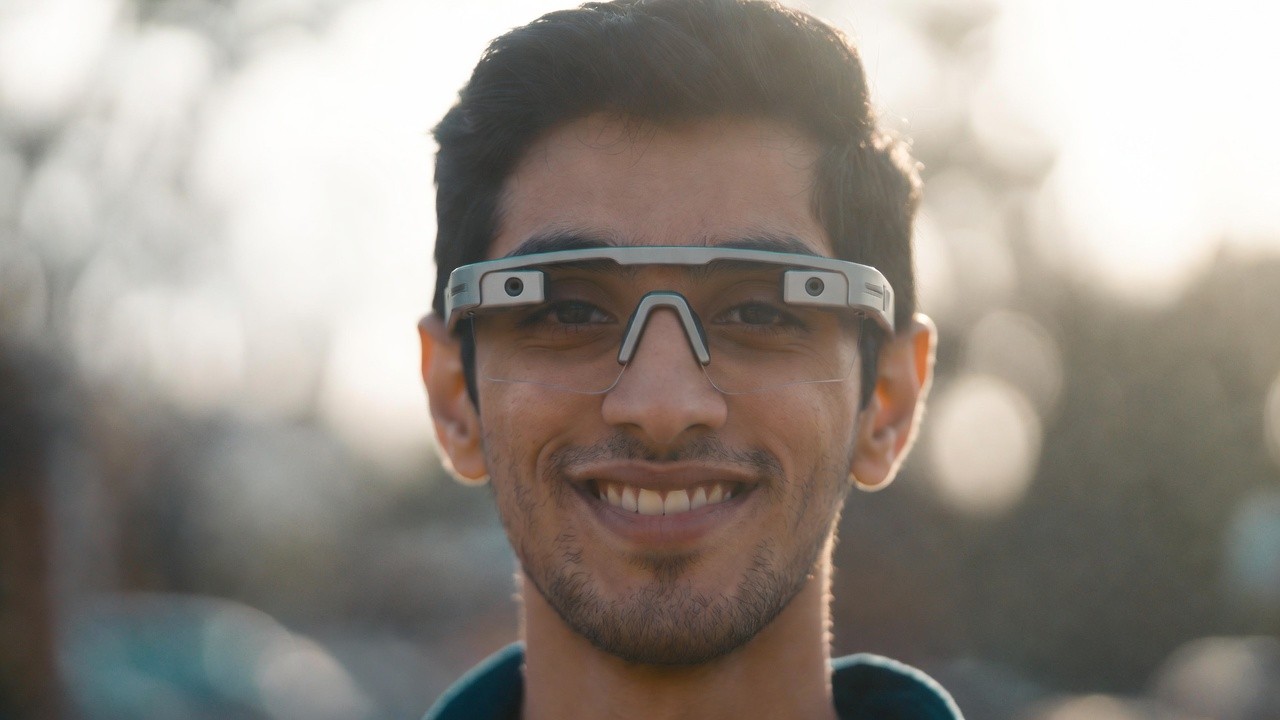
When your smart glasses observe that you always check competitor pricing before client meetings, they don't report that to a server farm. They simply start surfacing pricing data when your next client meeting approaches. When they notice you prefer walking routes through quieter streets, they adjust without broadcasting your habits to a third party.
The learning happens locally. The insights stay with you. No behavioral profile gets built for advertisers. No data broker gets a copy of your daily patterns.
The Three Principles That Make It Work
There's a framework that separates helpful personalization from invasive tracking.
First, local processing. Your data gets analyzed on your device, not in some cloud infrastructure you can't see or control. The intelligence lives where you live, on the device sitting on your face, not in a data center optimized for someone else's revenue model.
Second, transparent learning. You can see exactly what the system has learned about you. Every preference, every pattern, every suggestion source. Nothing is hidden. Nothing is inferred behind closed doors. If the system thinks you prefer morning meetings over afternoon ones, you can see that inference, correct it, or delete it entirely.
Third, user-controlled boundaries. You decide what gets captured and what doesn't. Walking into a private conversation? Pause capture with a word. Entering a sensitive meeting? The system respects the boundary. Your preferences shape the system. The system never shapes your behavior.
Why This Matters More Than Features
Privacy isn't a feature you bolt on after building something useful. It's the foundation that makes ambient intelligence possible in the first place.
Think about it. For ambient intelligence to work, it needs to be always on. It needs to see and hear your entire day. That level of access only works if the trust model is bulletproof. If even a fraction of users worry about where their data goes, the technology fails. Not technically, but socially.
That's why the companies racing to build ambient intelligence with traditional cloud-first, data-harvesting approaches will lose. Users won't wear something on their face that feeds their life to a server they don't control. The convenience isn't worth the cost.
The winners will be the ones who prove, architecturally, that your data is yours.
The Experience of Being Understood, Not Watched
When ambient intelligence gets personalization right, the feeling is unmistakable. It's not the creeping unease of seeing an ad for something you whispered about once. It's the quiet satisfaction of a tool that genuinely works for you.
Your glasses learn that you forget follow-ups after Thursday meetings and start nudging you Friday mornings. They notice you reference the same three metrics in every board prep session and have them ready before you start. They recognize when a conversation mirrors something from two weeks ago and surface the relevant context.
None of this requires selling your soul. None of it requires trusting a corporation with your most intimate daily patterns. It just requires technology built with the right priorities from the start.
The Gap Is Already Forming
Here's what most people don't realize: the professionals who adopt privacy-respecting ambient intelligence early won't just be more productive. They'll be operating with a personalized intelligence layer that compounds over time.
Every week the system learns more about how you work, what you need, and when you need it. Every week the suggestions get sharper, the recall gets faster, and the friction drops further. Meanwhile, everyone else is still manually managing their information, losing context between meetings, and hoping they remember the right details at the right time.
Six months from now, the gap between those with ambient intelligence and those without will be visible in every meeting, every negotiation, every strategic decision. A year from now, it will be the difference between leading and catching up.
The technology exists. The privacy model works. The only question is whether you'll be among the first to benefit from it, or among the many who wish they'd started sooner.
Ryxa AI is building the future of ambient intelligence. Join our waitlist to be among the first to experience what it's like to operate without memory friction.