
January 27, 2026
Article
How Ambient Intelligence Doubles Your Productive Hours
The average professional loses 20 hours weekly to memory friction, searching for information, reconstructing context, and managing the cognitive overhead of remembering everything manually.
The Real Productivity Killer Nobody Talks About
You planned three deep work sessions today. By 2pm, you've completed none of them.
Not because you're distracted. Not because you lack discipline. But because you've spent the morning on invisible work: 30 minutes searching for files mentioned in previous conversations, 45 minutes trying to remember what you committed to last week, another hour reconstructing meeting context before walking into your next one.
This is memory friction. The constant cognitive drag of operating without perfect recall.
And it's stealing half your productive capacity.
Forget time management advice. Forget focus techniques. The actual bottleneck in modern knowledge work isn't how you spend your time. It's how much time you lose reconstructing information you already encountered once.
Every day, you're forced to answer the same questions over and over: What did we decide in that meeting? Where is that document? What was the exact phrasing the client used? Who was supposed to follow up on this?
Each answer requires mental archaeology. Digging through emails, scrolling through notes, messaging colleagues, or simply straining to remember details your brain never reliably stored in the first place.
For a single task, maybe this costs two minutes. For a complex project spanning weeks of conversations, documents, and decisions? Fifteen minutes of reconstruction every time you context switch. And you context switch dozens of times daily.
The math is brutal. Even at a conservative estimate of 10 minutes lost per context switch and 20 switches per day, that's over 16 hours weekly spent just remembering what you already knew.
Ambient intelligence makes this entire category of work disappear.
Continuous Capture Means Zero Search Time
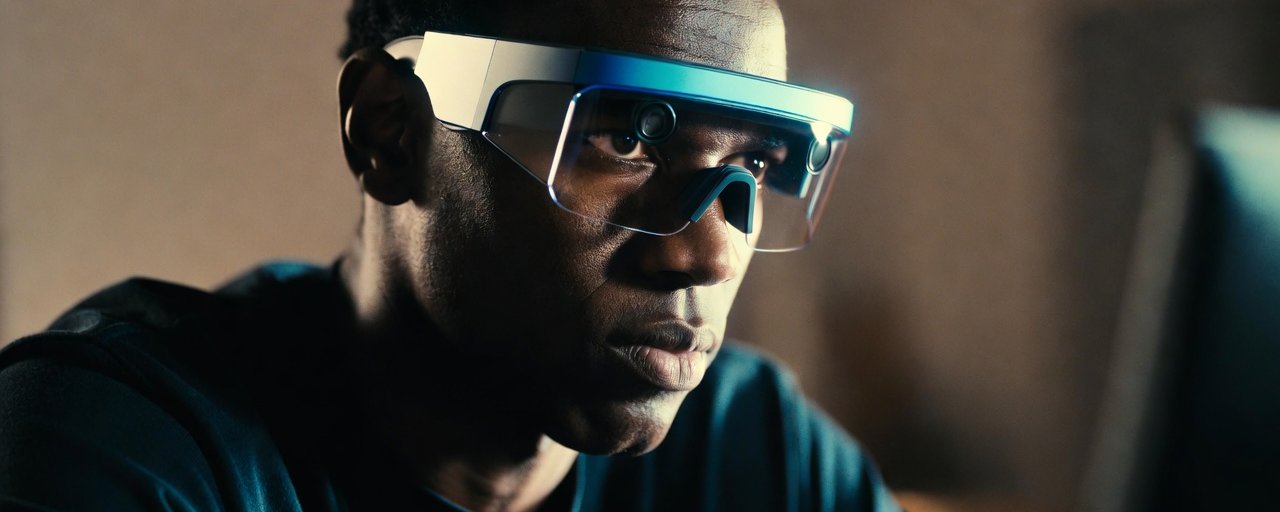
Here's what changes when you're wearing smart glasses that see everything you see and hear everything you hear:
You never search for information again. The system watched you look at that document three days ago. It knows exactly where it is. It captured the key details. It understood the context. When you need it, it surfaces instantly, before you finish typing the search query.
Someone mentions a deadline in a casual hallway conversation? Captured. A client shares a preference during a video call while you're focused on the presentation? Recorded. A colleague answers your question in Slack while you're in another meeting? Saved with full context.
Nothing falls through the cracks anymore, not because you're more disciplined about recording things, but because recording happens automatically, continuously, without any action required from you.
The time you previously spent searching (90 to 120 minutes daily for most knowledge workers) simply vanishes. That's two productive hours back in your day, just from eliminating search.
Perfect Context Means Instant Preparation
The second productivity multiplier: you never walk into a conversation unprepared again.
Before ambient intelligence, preparing for a meeting meant opening your calendar, skimming previous emails, trying to remember what you discussed last time, and hoping you didn't miss anything critical. This took 10-15 minutes if you were thorough, or you skipped it entirely and winged it.
With ambient intelligence, preparation is automatic.
Thirty seconds before your 3pm call, your smart glasses surface a brief that includes everything relevant: what you discussed in your last three interactions with this person, outstanding action items, documents you reviewed together, decisions that were made, and questions that were raised but never answered.
You walk in fully contextualized, instantly productive. No small talk while you reconstruct where you left off. No "sorry, remind me what we decided about...?" You pick up exactly where the last conversation ended, as if no time has passed.
This alone saves 45-60 minutes daily in preparation time and eliminates another 30-45 minutes of fumbling through meetings trying to piece together context. That's another 90 productive minutes recovered.
Proactive Reminders Mean Zero Dropped Commitments
The third layer: you never forget what you promised anyone.
Right now, keeping commitments requires active memory management. You have to remember to set reminders, document action items, update your task list, and follow up when things are due. Each of these is a manual step, and each one occasionally fails.
Ambient intelligence handles this automatically by understanding intent in real-time.
When you tell a client "I'll send you that proposal by Friday," the system doesn't wait for you to create a reminder. It understands that commitment, creates the task, and surfaces a proactive reminder Thursday afternoon with all the relevant context about what the proposal needs to include.
When your colleague says "let me know what you think about the new design," the system recognizes this as a pending action and reminds you before you see them next, with screenshots of the design in question.
You stop using mental energy to remember your obligations. The system remembers them for you and ensures they surface at exactly the right moment. This eliminates 30-40 minutes daily spent managing task lists and another 20-30 minutes recovering from dropped commitments.
The Compound Effect of Cognitive Offloading
Add it up:
90-120 minutes saved from eliminating search
60-90 minutes saved from automatic preparation
50-70 minutes saved from proactive commitment tracking
That's 200-280 minutes daily. Between three and five hours of productive capacity recovered, just from removing memory friction.
But here's what makes this exponential rather than additive: those hours aren't just "free time." They're hours where you can operate at peak cognitive capacity instead of partial capacity.
When your brain isn't using background processing power to track everything manually, that processing power redirects to the actual work. Your ability to think strategically, solve complex problems, and generate creative insights increases dramatically.
One founder described it this way: "I used to feel like I was operating at 60% because so much mental RAM was dedicated to just keeping track of everything. Now I'm at 100%, and that 100% goes entirely toward building the company."
The intelligence amplification isn't just about time. It's about operating at a fundamentally different level of capability.
From Reactive to Proactive
The final multiplier happens when the system stops being a passive recorder and becomes an active thinking partner.
Because ambient intelligence understands everything you're working on, it can make connections you'd never make yourself. It notices when information from a morning meeting is relevant to an afternoon project. It recognizes patterns across weeks of conversations. It surfaces insights from documents you reviewed months ago that suddenly matter again.
This isn't time saved. It's capability gained. You're making better decisions, seeing opportunities faster, and connecting dots that would have remained invisible.
Professionals using ambient intelligence report making strategic moves they would have never thought of without the system proactively surfacing connections. That's not doubling productivity. That's multiplying capability.
Why Early Adopters Will Dominate
Right now, everyone operates under the same constraint: limited, unreliable human memory. The playing field is level because everyone loses the same 15-20 hours weekly to memory friction.
But the moment someone adopts ambient intelligence, the playing field tilts.
They're suddenly operating with 15-20 extra productive hours per week. They never forget commitments, never lose context, and never miss details. They make connections others can't see because they have perfect recall of everything they've encountered.
In a competitive environment, that advantage is decisive. Not because they're working longer hours, but because every hour they work is spent on high-value thinking instead of information archaeology.
The professionals who adopt ambient intelligence first won't just be more productive. They'll operate at a level that looks superhuman to everyone else.
And the gap will only widen.
Ready to Reclaim Your Productive Hours?
Ambient intelligence isn't about doing more work. It's about eliminating the invisible work that steals half your day: the searching, reconstructing, remembering, and tracking that has nothing to do with your actual job.
When that friction disappears, you don't just get hours back. You get your full cognitive capacity back. And you get to spend it on work that actually matters.
Ryxa AI is building the future of ambient intelligence. Join our waitlist to be among the first to experience what it's like to operate without memory friction.